help them decide, and decide for them, at the same time
~38weeks, down from 52
10%fewer manual touchpoints
>$5Bin attributed profits
Walmart's assortment was a manual, intricate dance: which items, how many, and the nuance of each store. With a pandemic and an organization in change, even the merchant's role wasn't commonly understood.
I joined the India extension of Valerie Casey's design team, and led design in a four-in-the-box with product, engineering and the business.
What we found
Demand, supply, pricing and logistics all depend on each other.
Buyers need information in sequence.
Merchants' work with suppliers stays human.
Aid, then decide.The product balanced helping merchants decide with deciding for them, so merchants stayed in charge.
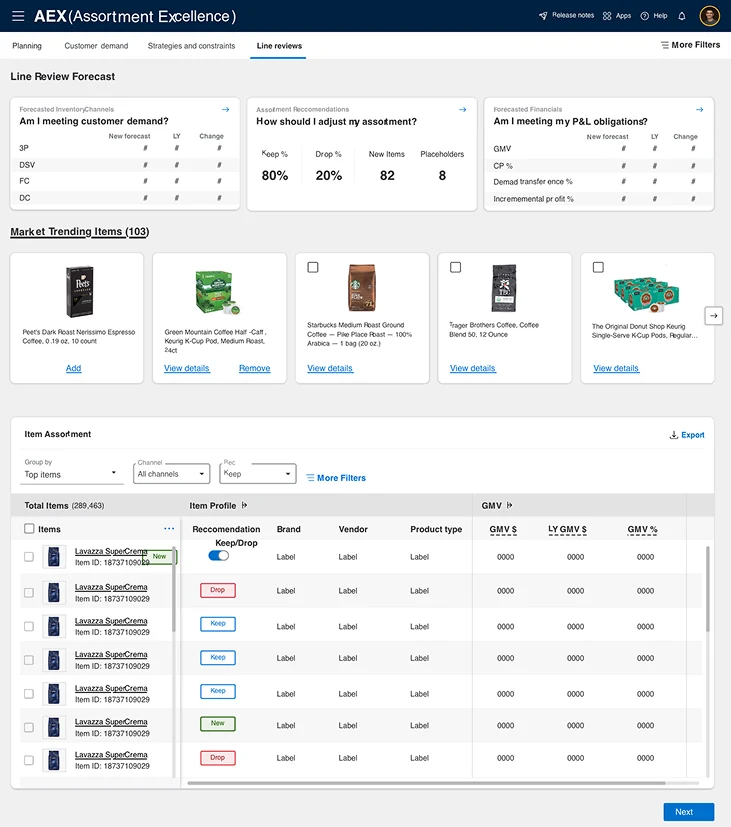
Sequence the information.We brought scattered data into streamlined tools, in the order buyers work, across space, pricing, markdowns and adjacencies.
Change a running system gently.We redefined roles with the business, and kept checking in with merchants for comfort and new skills.
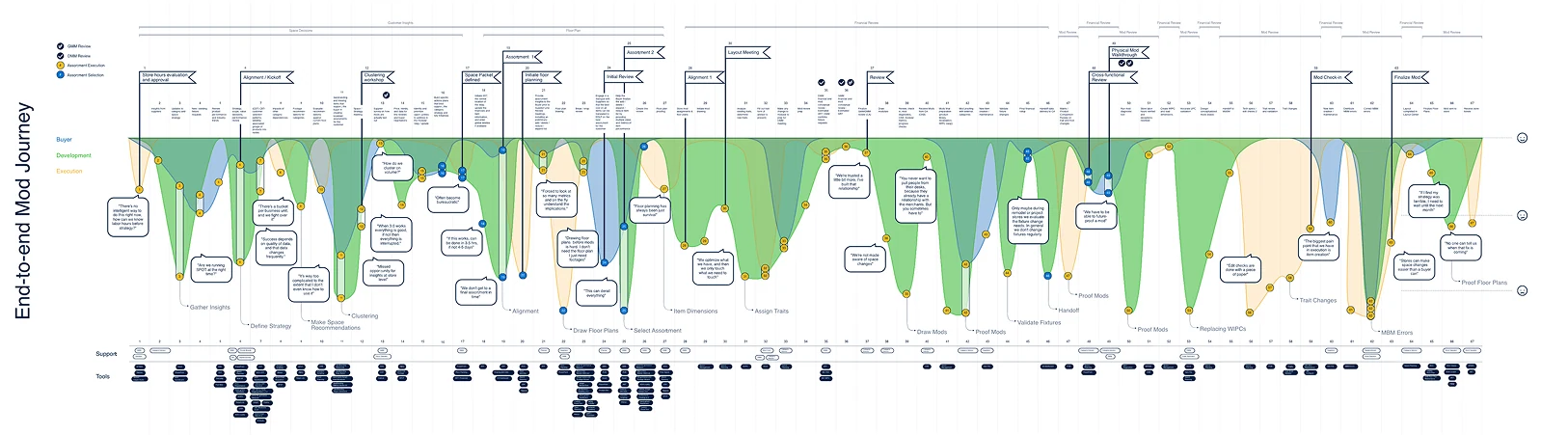
The merchant's journey, one planning cycle
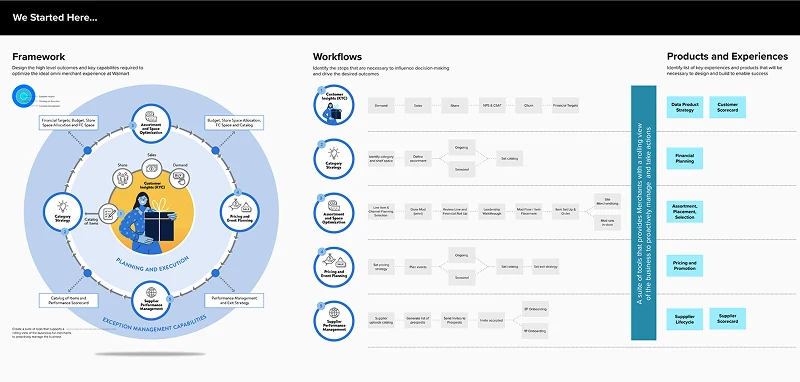
The system: demand, supply, pricing and logistics, and how they depend on each other
The cycle, before and after
Planning cycle
52 weeks
~38 weeks
Final assortment calls
3–5 weeks
1.5 weeks
The teamFour in the box: product, engineering, business and design. I reported to Kate Holms and Brian Ross at different times, and to Valerie Casey through transitions.Peers · Supplier negotiation · Pricing, markdowns and replenishment
Shipped
Finalising the year's items
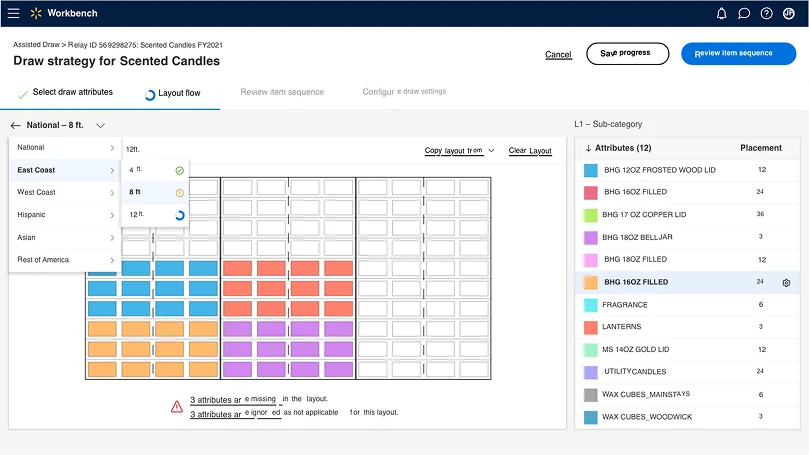
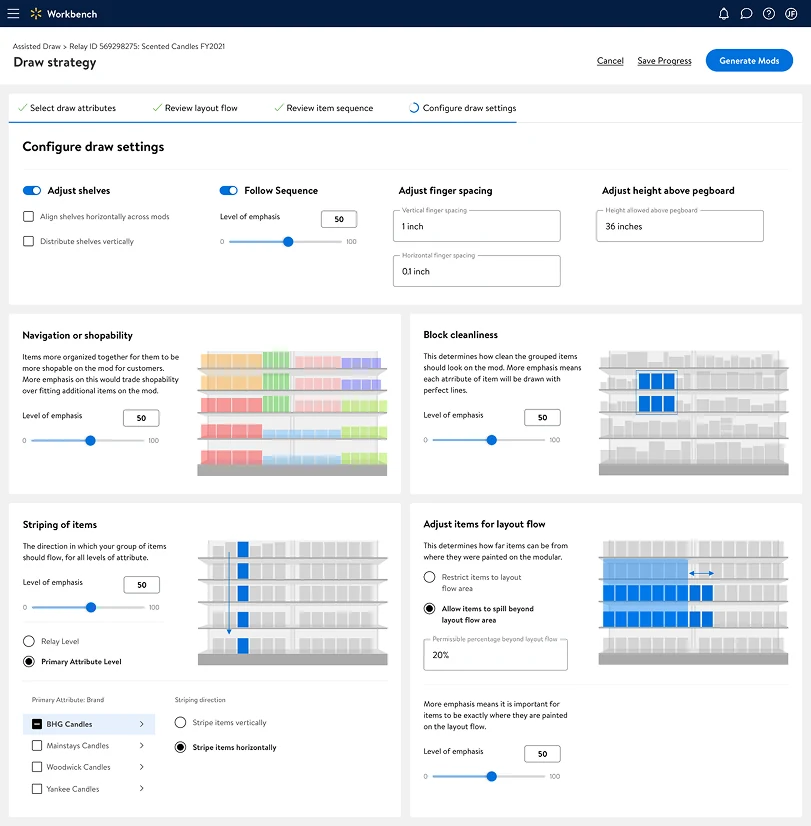
Mod drawings and placement
Draw strategy, settings
What it became
Merchants made more of their calls from data, and spent their time on suppliers and negotiation.